This project is appropriate for all ages, requires little prep from the parent, and creates striking results! There's a kind of visual magic when the tape is removed, and both big and little kids will enjoy this.
I was inspired by this post on Sun Hats & Wellie Boots. and The Resourceful Mama. They did a simple cross, and we did an Eastern style cross for our Byzantine New Year party's art project. (get your printable Liturgical year icon wall calendar here) Not only does this provide experience crafting and painting, practicing motor skills, and exercising one's will to create a finished product, it also engenders greater familiarity with the shape of the tri-bar cross.
You'll need thick paper or canvases, paint brushes and paint (either acrylics or watercolors), and masking tape or painters tape. Optional supplies include newspaper as a work surface, and embellishments. Don't forget your homeschool teacher's id to get your discount at participating stores!
Use your tape and make your cross shapes. You can be very precise about this if you want, though I just eyeballed it. Make sure to press down the edges of the tape a little extra if you are painting on a surface like canvas that isn't perfectly smooth.
Set out the paints and let the kids have at it! The whole piece should be covered in color -- only the cross will remain white. Enjoy the process! There is no wrong way to do this.
After you've let the paint dry a little, peel off the tape. If you feel your artwork is complete then hooray! Or, let it dry a little longer to add the next layers. We used glitter glue, metallic paint pens, and stick-on jewels.
What a joy to see all the different styles and outcomes! So colorful and vibrant, every one.
the pursuit of the natural lifestyle in a commercial society -- creativity, eating well, homeschooling, o/Orthodoxy, parenting, homemaking, and such
Showing posts with label homeschool. Show all posts
Wednesday, September 6, 2017
Tuesday, April 12, 2016
Intro to Human & Animal 4th Grade Lesson Block
In the fourth grade of Waldorf education there is a lesson block that looks at the relationship between humans and the rest of animal creation. I had a hard time making sense of it. Having been taught something very different in my grade school days (ideas that have not served well, by the way) it was a whole new perspective to explore, and the full-on Anthroposophic Steiner model didn't work for me. The more I got into it, tho', I could see the core parts were good, and they integrate well with our Eastern Christian understandings.
For further reading to understand better the Waldorf/Steiner mode of seeing this topic, the book "The Human Being and the Animal World" by Charles Kovacs is especially good at delving into it. This blog post from Five of Us does a decent job of summarizing.
Of course, this is a natural opportunity to include the idea of humanity as the truest icons of the Divine, and that may lead into a further lesson about what icons are and how we use them. I particularly like this blog post on the topic.
This intro to the difference between human and animals helps support and make some important underlying foundational concepts that are needed in Eastern Christianity:
-- understand the nature of the flow of the spirit through our bodies will be useful later on when breathing & spiritual practice are taught
-- the beauty of the head, trunk, limbs metaphor is not lost later on when we learn about the purpose of humanity in God's creation
-- no judgement is placed on the rest of God's creation as lesser or lacking, just functionally and different in purpose
-- it also does not overemphasize intellect as tho' that is our most important tool; this sets up the importance of thinking and listening from the heart, and not accidentally giving the intellect and "monkey mind" too much significance
Here are the beginning pages to our block (the following pages are physical animal studies and observations).
For further reading to understand better the Waldorf/Steiner mode of seeing this topic, the book "The Human Being and the Animal World" by Charles Kovacs is especially good at delving into it. This blog post from Five of Us does a decent job of summarizing.
Of course, this is a natural opportunity to include the idea of humanity as the truest icons of the Divine, and that may lead into a further lesson about what icons are and how we use them. I particularly like this blog post on the topic.
This intro to the difference between human and animals helps support and make some important underlying foundational concepts that are needed in Eastern Christianity:
-- understand the nature of the flow of the spirit through our bodies will be useful later on when breathing & spiritual practice are taught
-- the beauty of the head, trunk, limbs metaphor is not lost later on when we learn about the purpose of humanity in God's creation
-- no judgement is placed on the rest of God's creation as lesser or lacking, just functionally and different in purpose
-- it also does not overemphasize intellect as tho' that is our most important tool; this sets up the importance of thinking and listening from the heart, and not accidentally giving the intellect and "monkey mind" too much significance
Here are the beginning pages to our block (the following pages are physical animal studies and observations).
Wednesday, October 28, 2015
Drawing the Quality of Numbers 1-10 in First Grade
In 1st grade of Waldorf education, the quality of numbers of explored before the math of it all. Numbers are so real and fun to children -- they're not just a means to count or tally something. That's why we draw the numbers with concrete associations. Not only will it help to remember the number, but it also sets philosophical foundations (for example, presenting the idea of "one" as "wholeness"). Whatever thing we use as an example has other applications as a story, a movement game, a real-life object we can observe and learn from.
Here are my examples of what I presented in chalk for the numbers one through ten. With all the different ways to represent a number, I have tailored it to the kids I am presenting it to (the below are what I did for my third child). Note: I am not a grand artist, I do not make amazing chalkboard drawings nor crayon works of art. Still, I'm posting this picture to give others some ideas & inspiration. Be encouraged! "Even I can do that!" or "I can do better that that!". Someday my chalk art skills might improve, but in the meantime this still works, and my kids are still learning just fine.
Monday, October 19, 2015
St Elizabeth the Wonderworker and the Dragon; Waldorf Ideas
If you are not familiar with Elizabeth the Wonderworker, taker a moment
to look her up. She is a fascinating and influential
character -- she is both a gentle healer, and a wielder of powerful presence. In the Eastern Christian tradition, her feast
day and the feast day of St George are in the Springtime.
In the Waldorf calendar of seasonal celebrations, the story of Saint Elizabeth fits in nicely in the Fall/Autumn since she was a dragon slayer, and that is the story soul-quality for the Waldorf seasonal celebration of Michaelmas. People who wish to show more examples of female saints will find that her story fits in perfectly. This story may appeal to some for it's lack of violence: she used no weapons in her interactions with the dragon. While in the original story the dragon does die in the end, it can be varied variation for more sensitive minded/hearted children who have a hard time with the dragon dying. Saying the she "subdued the dragon" will not change the soul-quality of the story, nor change the seeds planted for personal growth later in life.
Below are some ideas about how to make a festival with her as the focus, as well as a version of the dragon story. You will find that many Michaelmas dragon type crafts also fit in well here, and you can find many other dragon themed crafts on the web that might be appropriate.
Ideas for celebrating:
-- This story lends itself very well to a puppet show.
-- Make dragon bread.
-- Make a dragon out of clay.
-- Dress up as Saint Elizabeth and walk around barefoot inside and outside. Walk around and explore different terrains and textures.
-- Perform a play of the story.
-- Make a painting, chalk, or crayon drawing of Elizabeth and the dragon.
-- Consider eating a meal of foods from Greece or Turkey, the regions in which she lived (Thrace).
A Story of St Elizabeth The Wonderworker and the Dragon
Elizabeth was a talented and holy woman who knew from early on that she had a special mission in life to be a nun and to help people. Elizabeth worked and studied all her life to make her abilities strong and focused. She was extra gentle and kind to everyone, and very tender-hearted towards those who were sick or hurt. She knew healing arts, and helped many people become well again. She healed both their hearts and their bodies. The group of holy women she lived with looked to her for guidance, and people from all over traveled to seek her wisdom.
The emperor of the land was so grateful for all the good things this group of women did that he gave them a piece of land to make their home where they could live and people could come to for help. Before they moved there, they learned that there was a terrible dragon that lived there in a cave. The dragon made people scared & afraid, and filled their hearts with despair. But Elizabeth did not feel despair nor any fear. She confidently walked in her bare feet right up to the cave with nothing else; no tools and no weapons -- just the surety of God and knowledge of what is rightful. Elizabeth boldly called "Dragon! COME OUT!" and the dragon obeyed her! The fierce-some and surly dragon slithered out and in stood front of her. Elizabeth made the sign of the cross over the dragons head and the dragon immediately became calm. She placed her bare foot on the dragons head and subdued it.
In second grade the story of St Elizabeth the Wonderworker might be added as one of the main lesson block stories. You can find out more of her story by searching online as well as other pictorial depictions of her and her life. Here is the main lesson book entry and picture of my second grader:
In the Waldorf calendar of seasonal celebrations, the story of Saint Elizabeth fits in nicely in the Fall/Autumn since she was a dragon slayer, and that is the story soul-quality for the Waldorf seasonal celebration of Michaelmas. People who wish to show more examples of female saints will find that her story fits in perfectly. This story may appeal to some for it's lack of violence: she used no weapons in her interactions with the dragon. While in the original story the dragon does die in the end, it can be varied variation for more sensitive minded/hearted children who have a hard time with the dragon dying. Saying the she "subdued the dragon" will not change the soul-quality of the story, nor change the seeds planted for personal growth later in life.
![]() |
| In this icon you can see the cave of the dragon on the background and Elizabeth's bare foot on the dragon's head. |
Below are some ideas about how to make a festival with her as the focus, as well as a version of the dragon story. You will find that many Michaelmas dragon type crafts also fit in well here, and you can find many other dragon themed crafts on the web that might be appropriate.
Ideas for celebrating:
-- This story lends itself very well to a puppet show.
-- Make dragon bread.
-- Make a dragon out of clay.
-- Dress up as Saint Elizabeth and walk around barefoot inside and outside. Walk around and explore different terrains and textures.
-- Perform a play of the story.
-- Make a painting, chalk, or crayon drawing of Elizabeth and the dragon.
-- Consider eating a meal of foods from Greece or Turkey, the regions in which she lived (Thrace).
A Story of St Elizabeth The Wonderworker and the Dragon
Elizabeth was a talented and holy woman who knew from early on that she had a special mission in life to be a nun and to help people. Elizabeth worked and studied all her life to make her abilities strong and focused. She was extra gentle and kind to everyone, and very tender-hearted towards those who were sick or hurt. She knew healing arts, and helped many people become well again. She healed both their hearts and their bodies. The group of holy women she lived with looked to her for guidance, and people from all over traveled to seek her wisdom.
The emperor of the land was so grateful for all the good things this group of women did that he gave them a piece of land to make their home where they could live and people could come to for help. Before they moved there, they learned that there was a terrible dragon that lived there in a cave. The dragon made people scared & afraid, and filled their hearts with despair. But Elizabeth did not feel despair nor any fear. She confidently walked in her bare feet right up to the cave with nothing else; no tools and no weapons -- just the surety of God and knowledge of what is rightful. Elizabeth boldly called "Dragon! COME OUT!" and the dragon obeyed her! The fierce-some and surly dragon slithered out and in stood front of her. Elizabeth made the sign of the cross over the dragons head and the dragon immediately became calm. She placed her bare foot on the dragons head and subdued it.
In second grade the story of St Elizabeth the Wonderworker might be added as one of the main lesson block stories. You can find out more of her story by searching online as well as other pictorial depictions of her and her life. Here is the main lesson book entry and picture of my second grader:
![]() |
| (In this case, the different colored words do not have a purpose -- my young student just "wanted it to be pretty") |
Wednesday, August 5, 2015
2015-2016 HomeSchool Plan; Waldorf Essentials
Life has been rough, but it's starting to come together. Six moves and five births in the course of our ten year marriage have taken their toll on stability and health. We have done the best we can with what we had, done homeschooling, did one year at a Waldorf school, and did a lot of unschooling.
Now that we are settled, we have some very real options! and our path seems to be really opening up, opportunities presented, and people showing up at just the right times. It has always been the case in my life that when I move in the direction I am meant to, things just work out. This has been the case this summer, so I'm going to run with it!
I am looking forward to a new normal this year. Something that works better, meets needs, calms anxiety, and is well supported. I can't do it on my own.
For a while Christopherus served us very well. It was flexible in just the ways I needed. It set a really good grades foundation, and I liked what was there. I needed to revisit what I needed in our lives, and what would make it possible for me to get me kiddos what they need. After re-looking at the comparison of possible homeschool curricula, I asked God for help. *boom* and *poof* the path was presented to me. Financially we were cut a break, support came pouring in, and schedule options started making themselves present.

We will be doing Waldorf Essentials for our graders (2nd and 4th), and I will be following the simple Wee Folk seasonal guides for the littles until I can get homelife a bit more on-track to do W.E. with them as well. I got the lifetime membership, called the Thinking, Wiling, Feeling program, which includes all the curricula materials for all the grades, a support community, and one-on-one assistance from the creator of W.E. For life!
This is just what I needed. After so many health difficulties and hardships, I really needed someone else to walk me through getting-my-act-in-order. Melissa, the creator, understands this having recovered from her own health challenges. A person must work within their limitations to make something functional,. She has helped me understand where I can cut some corners, and which items are the most important to focus on and keep intact in terms of child development and nourishing, and which others I can change a bit to suit my own abilities & needs.
Importantly, she has homeschooled five children of varying ages. She understands what a busy homelife can be. what it means to recover from pregnancy and life events, and how to juggle so that it really is possible to school the bigsters with the little still around.
These weeks before the school year starts in September I am going through a guided planning process. The heavy burden is lifted, and now I can concern myself with that actually needs doing instead of stressing unnecessarily.
Now that we are settled, we have some very real options! and our path seems to be really opening up, opportunities presented, and people showing up at just the right times. It has always been the case in my life that when I move in the direction I am meant to, things just work out. This has been the case this summer, so I'm going to run with it!
I am looking forward to a new normal this year. Something that works better, meets needs, calms anxiety, and is well supported. I can't do it on my own.
For a while Christopherus served us very well. It was flexible in just the ways I needed. It set a really good grades foundation, and I liked what was there. I needed to revisit what I needed in our lives, and what would make it possible for me to get me kiddos what they need. After re-looking at the comparison of possible homeschool curricula, I asked God for help. *boom* and *poof* the path was presented to me. Financially we were cut a break, support came pouring in, and schedule options started making themselves present.

We will be doing Waldorf Essentials for our graders (2nd and 4th), and I will be following the simple Wee Folk seasonal guides for the littles until I can get homelife a bit more on-track to do W.E. with them as well. I got the lifetime membership, called the Thinking, Wiling, Feeling program, which includes all the curricula materials for all the grades, a support community, and one-on-one assistance from the creator of W.E. For life!
This is just what I needed. After so many health difficulties and hardships, I really needed someone else to walk me through getting-my-act-in-order. Melissa, the creator, understands this having recovered from her own health challenges. A person must work within their limitations to make something functional,. She has helped me understand where I can cut some corners, and which items are the most important to focus on and keep intact in terms of child development and nourishing, and which others I can change a bit to suit my own abilities & needs.
Importantly, she has homeschooled five children of varying ages. She understands what a busy homelife can be. what it means to recover from pregnancy and life events, and how to juggle so that it really is possible to school the bigsters with the little still around.
These weeks before the school year starts in September I am going through a guided planning process. The heavy burden is lifted, and now I can concern myself with that actually needs doing instead of stressing unnecessarily.
Tuesday, June 9, 2015
Review of Kiwi Crate
The advertisements for it kept popping up in my news feed, so I figured I'd try out Kiwi Crate (they have good deals & discounts for your first order, so very little risk in trying it). Kiwi Crate is subscription where you get a themed box of age appropriate activities each month. In this case, Kiwi Crate is geared for ages 4 thru 8. The younger kids will need more hands-on guidance than the older ones.
Skip to the bottom paragraphs for my assessment plus a discount referral.

Our first cute green shoebox size package arrived chock full of stuff. The month's topic was insects.
It had everything inside it that you need for a given activity including the tools, supplies, instructions, and a little book full of related info and games. It had at least three projects in it, but actually more if you count the cute little games in the book and coloring pages. A lot fits in that little box.
The materials were a good quality, and the instructions were easy for the kiddos to see and for me to read and follow. After we read through the little book and did the activities with our fingers (we'll go over them with pens & crayons later), we decided to make the clay activity -- insect tic-tac-toe. This project came with the two different colored clays (model magic -- so very easy for the kidlets to handle & mold), felt sticker shapes, adhesive googly eyes, the transparent plastic wings, pictorial instructions, and the nine space box that acts as a game board and a holder. I helped some, but the kids mostly took over with the bigs helping the littles. That was fantastic -- it was something they could do themselves that didn't need me to jump in and help. They felt very accomplished.


In conclusion: It was EVEN BETTER than I thought it might be! It really was age appropriate in materials and complexity. The activity was just the right amount of time for the kiddos to remain interested and not want to move on before completing the project. There are still more projects in the box for us to do! I'm going to get several more days out of this. The older kids were interested and asking questions, too, so it turned into some lessons for them, as well.
This was like having homeschool in a box. Everything already gathered and laid out for me. What could be easier?! Perfectly stress-free for me.
Would you like $10 off when you sign up? Use this referral link -- you get a discount, and I get a little discount too. Win-win!
addendum: The dragonfly flyer activity was fun for all. This activity was so simple and straight-forward that it also enabled them learn to follow directions and match their supplies to the pictured steps.
(reviews of Tinker Crate and Koala Crate to come later)
Skip to the bottom paragraphs for my assessment plus a discount referral.

Our first cute green shoebox size package arrived chock full of stuff. The month's topic was insects.
It had everything inside it that you need for a given activity including the tools, supplies, instructions, and a little book full of related info and games. It had at least three projects in it, but actually more if you count the cute little games in the book and coloring pages. A lot fits in that little box.
The materials were a good quality, and the instructions were easy for the kiddos to see and for me to read and follow. After we read through the little book and did the activities with our fingers (we'll go over them with pens & crayons later), we decided to make the clay activity -- insect tic-tac-toe. This project came with the two different colored clays (model magic -- so very easy for the kidlets to handle & mold), felt sticker shapes, adhesive googly eyes, the transparent plastic wings, pictorial instructions, and the nine space box that acts as a game board and a holder. I helped some, but the kids mostly took over with the bigs helping the littles. That was fantastic -- it was something they could do themselves that didn't need me to jump in and help. They felt very accomplished.


In conclusion: It was EVEN BETTER than I thought it might be! It really was age appropriate in materials and complexity. The activity was just the right amount of time for the kiddos to remain interested and not want to move on before completing the project. There are still more projects in the box for us to do! I'm going to get several more days out of this. The older kids were interested and asking questions, too, so it turned into some lessons for them, as well.
This was like having homeschool in a box. Everything already gathered and laid out for me. What could be easier?! Perfectly stress-free for me.
Would you like $10 off when you sign up? Use this referral link -- you get a discount, and I get a little discount too. Win-win!
addendum: The dragonfly flyer activity was fun for all. This activity was so simple and straight-forward that it also enabled them learn to follow directions and match their supplies to the pictured steps.
(reviews of Tinker Crate and Koala Crate to come later)
Friday, October 24, 2014
"Arithmetic Village" -- an alternative to other Waldorf Early Maths
Math gnomes and math squirrels that are often used in the teaching of early maths in Waldorf curricula. However, neither of those have really jived with our family. The squirrels in our Christopherus curriculum left me nonplussed. The math gnomes having their own color association is really smart (as each
one matches a temperament), but I didn't want my kiddos associating
alongside them since my kiddos are similarly color coded.
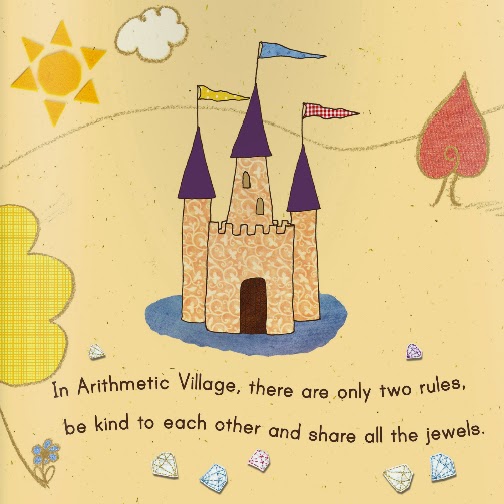
I just recently found Arithmetic Village via a fellow mommy blogger and homeschooler who wrote a review about it here. It's a cute little set of five books explaining the functions of addition, subtraction, multiplication, and division. The illustrations are warm and charming, and the rhyming verse is not only fun to read but also easy for kids to recall. Each character also have traits told through story and rhyme for each basic mathematical process, which is a teaching method that I find very Waldorf compatible.
I like the idea of getting some counting jewels, too -- like those flat glass marble things in their own colors since my kids are color coded, which makes my life more sane. The idea of decorating our math treasure chests is also a very appealing craft project. Some beads, or those flat glass marbles/stones, and some wooden chests form the craft store would be just right. With my discount from teacher id, it would be very affordable, too. We could make our own bags (in the story the bags hold 10 each), or I could get those organza favor bags from the wedding section and be done.
For those who might find them useful, there are a _ton_ of free downloads, worksheets, activity packs, ideas, and videos to go along with Arithmetic Village, and the lady who came up with it is super nice, and very responsive to questions. There isn't a lot to purchase besides the books, and the supplies you might gather yourself can be purchased affordably -- you might even have some of it already!
I'm actually rather excited about this! I got the .pdf copies of the book today (but you can get them beautifully printed out & ready to go), and am looking forward to binding/sewing our own (another handwork/craft project), and reading them. It'll be a little while before we really get into it, but I anticipate this one is going to be a real winner!
There are several places besides the main webpage where you can check out Arithmetic Village and the resources it offers:
a Pinterest page: http://www.pinterest.com/arithmeticv ,
a facebook page https://www.facebook.com/TheArithmeticVillage
on YouTube here
and you can even flip through the books here!: http://issuu.com/arithmeticvillage/docs
I just recently found Arithmetic Village via a fellow mommy blogger and homeschooler who wrote a review about it here. It's a cute little set of five books explaining the functions of addition, subtraction, multiplication, and division. The illustrations are warm and charming, and the rhyming verse is not only fun to read but also easy for kids to recall. Each character also have traits told through story and rhyme for each basic mathematical process, which is a teaching method that I find very Waldorf compatible.
I like the idea of getting some counting jewels, too -- like those flat glass marble things in their own colors since my kids are color coded, which makes my life more sane. The idea of decorating our math treasure chests is also a very appealing craft project. Some beads, or those flat glass marbles/stones, and some wooden chests form the craft store would be just right. With my discount from teacher id, it would be very affordable, too. We could make our own bags (in the story the bags hold 10 each), or I could get those organza favor bags from the wedding section and be done.
For those who might find them useful, there are a _ton_ of free downloads, worksheets, activity packs, ideas, and videos to go along with Arithmetic Village, and the lady who came up with it is super nice, and very responsive to questions. There isn't a lot to purchase besides the books, and the supplies you might gather yourself can be purchased affordably -- you might even have some of it already!
I'm actually rather excited about this! I got the .pdf copies of the book today (but you can get them beautifully printed out & ready to go), and am looking forward to binding/sewing our own (another handwork/craft project), and reading them. It'll be a little while before we really get into it, but I anticipate this one is going to be a real winner!
There are several places besides the main webpage where you can check out Arithmetic Village and the resources it offers:
a Pinterest page: http://www.pinterest.com/arithmeticv ,
a facebook page https://www.facebook.com/TheArithmeticVillage
on YouTube here
and you can even flip through the books here!: http://issuu.com/arithmeticvillage/docs
Saturday, July 12, 2014
Our Musical Instrument for First & Second Grade
In the curriculum we've been loosely following, the beginning instrument for the early grades is a flute or recorder. Many people opt for the expensive tho' beautifully sounding wooden choroi flutes, some in the pentatonic scale, others a recorder, and some even get a penny whistle instead. There are many articles and videos out there to assist in making an educated choice. We first tried with a recorder, but the kids had a lot of difficulty with it, and we also gave a flutophone a try.
We finally settled on this one. Yes, really: the durable, cheap molded plastic, $3.99 song flute that sounds amazingly mediocre. No one would recommend it as a part of a curriculum, no one says it's a quality instrument (you get what you pay for), and everyone agrees the notes it plays are "just okay". But I would recommend it.
It is really just right for small hands! The finger holes are not straight but in a curved line that fits a more natural hand hold, and the size is just right for small hands. On the other instruments we tried, the kids had a hard time handling them and we spent all our time on motor skills and no actual time on music. Already one has gotten thrown around and dirtied by a younger sibling. No problem: just threw it in a sink of soapy water, rinsed it, and voila, ready to go again. I also have zero stress worrying about a instrument getting lost or ruined. If one of these really tough ones actually does somehow get trashed (that would take a lot of work), then I won't feel like I'm breaking the bank to replace it.
The four kiddos have picked up on it so quickly! Even though it is still odd for them to hold their fingers in that way, pressing over the instrument holes, they are no longer struggling. In only four classes with it we found our "musical breath", good posture, how to place it to our mouth, and have learned our first two-note song. I'd say that's success.
Also, it's so easy to learn! The notes are directly in scale order one right after another. I taught myself with a few YouTube videos and took it from there teaching myself "Twinkle, Twinkle, Little Star", "We Thank You God Most High", a late medieval tune I can't remember the name of, and the St Martin Lantern walk song "Glimmer, Lantern, Glimmer". I think I'm coming right along (and staying nicely ahead of my students).
We finally settled on this one. Yes, really: the durable, cheap molded plastic, $3.99 song flute that sounds amazingly mediocre. No one would recommend it as a part of a curriculum, no one says it's a quality instrument (you get what you pay for), and everyone agrees the notes it plays are "just okay". But I would recommend it.
It is really just right for small hands! The finger holes are not straight but in a curved line that fits a more natural hand hold, and the size is just right for small hands. On the other instruments we tried, the kids had a hard time handling them and we spent all our time on motor skills and no actual time on music. Already one has gotten thrown around and dirtied by a younger sibling. No problem: just threw it in a sink of soapy water, rinsed it, and voila, ready to go again. I also have zero stress worrying about a instrument getting lost or ruined. If one of these really tough ones actually does somehow get trashed (that would take a lot of work), then I won't feel like I'm breaking the bank to replace it.
The four kiddos have picked up on it so quickly! Even though it is still odd for them to hold their fingers in that way, pressing over the instrument holes, they are no longer struggling. In only four classes with it we found our "musical breath", good posture, how to place it to our mouth, and have learned our first two-note song. I'd say that's success.
Also, it's so easy to learn! The notes are directly in scale order one right after another. I taught myself with a few YouTube videos and took it from there teaching myself "Twinkle, Twinkle, Little Star", "We Thank You God Most High", a late medieval tune I can't remember the name of, and the St Martin Lantern walk song "Glimmer, Lantern, Glimmer". I think I'm coming right along (and staying nicely ahead of my students).
Monday, December 2, 2013
Learning About Wild Plants
I really like plants, herbs, gardening, and the knowledge of these wonderful gifts of creation that do so much for us!

Wild Food Girl is extremely knowledgeable about non-cultivated plants all around us that are useful, edible, and how to harvest and prepare them. She has created a monthly publication called The Wild Edible Notebook.It is a real quality ezine that is detailed with many pages, color pictures, and several different readable and printable formats to download. This is very exciting to me -- it's a kind of lost knowledge that the plants all around us are there to provide for our needs of food and medicine, of beauty and life.
I am really looking forward to adding this to our homeschool explorations! This in addition to the Herb Fairies books and supplemental info are going to make for some plant savvy kiddos!
Wild Food Girl is extremely knowledgeable about non-cultivated plants all around us that are useful, edible, and how to harvest and prepare them. She has created a monthly publication called The Wild Edible Notebook.It is a real quality ezine that is detailed with many pages, color pictures, and several different readable and printable formats to download. This is very exciting to me -- it's a kind of lost knowledge that the plants all around us are there to provide for our needs of food and medicine, of beauty and life.
I am really looking forward to adding this to our homeschool explorations! This in addition to the Herb Fairies books and supplemental info are going to make for some plant savvy kiddos!
Friday, October 4, 2013
A Fair-ing We Will Go!
This weekend we are going to our local little Renaissance Faire. It will be a welcome break from unpacking and trying to get settled into our new home. Unlike our box filled garage, dust, and helter-skelter living arrangement (although we do have beds now - yay!), it will be colorful and lively, have whimsy and fantasy, and full of music and costumes/garb, and fun things to participate in. Since the kiddos are still in that young age when H/history is more of a set of stories and fairy tales, this is a nice kind of introductory experience. It may plant the seeds for al kinds of further explorations and pursuits for them.
I contacted the faire organizers ahead of time, and they assured me that they keep everything purposefully very family friendly. I am glad, since we went to one earlier in the year that was really awful, and constantly full of bawdy jokes. We are looking for a better time this weekend to make up for the not-so-awesome one.
In preparation, I've got the kids a few fun Ren Faire inspired coloring pages. Also, I'd better find the box labeled "dress up", and soon! since they really want to wear their "princess dresses" (split-front 'Irish' ren kind of garb with under chemises) to the faire, too.
![]() |
| photo courtesy of SEG |
![]() |
| photo courtesy of SEG |
In preparation, I've got the kids a few fun Ren Faire inspired coloring pages. Also, I'd better find the box labeled "dress up", and soon! since they really want to wear their "princess dresses" (split-front 'Irish' ren kind of garb with under chemises) to the faire, too.
Monday, September 9, 2013
Summer afternoon unschooling
This noon's outside time was spent on a blanket with many little doing different activities, looking at books, singing songs, cutting up the harvested herbs, and an impromptu haircut. Unschooling at its best!
You could rephrase it as studying literacy, rhythm and music, herbology & plant identification, and grooming & bodily care. Topics of conversation included mythology, theology, and urban planning as well as agricultural use.
Get a Homeschool ID Card (for free; for teacher or students)
There are lots of places that require some sort of identification card, and there are many businesses which give a student discount or a teacher discount. It's really worth having one. Here are two good places online to make your own.
Free Homeschool ID Card from the Homeschool Buyers Co-Op
Make it, save/download it, and print it off, and laminate it. You also have the option of ordering "a professionally printed, sturdy plastic (PVC) ID card from the Co-op for only $7.95" I choose this option because it's fast and very professional looking, very durable, and it very quickly pays for itself.
Badge Maker from Big Huge Labs
"Make your own ID card, press pass, name tag, unofficial Flickr badge, or any other kind of identification. Print it out, laminate it, wear it with pride! Make any kind of identification* easily in just a few seconds." Make it, save/download it, and print it off, and laminate it.
Free Homeschool ID Card from the Homeschool Buyers Co-Op
Make it, save/download it, and print it off, and laminate it. You also have the option of ordering "a professionally printed, sturdy plastic (PVC) ID card from the Co-op for only $7.95" I choose this option because it's fast and very professional looking, very durable, and it very quickly pays for itself.
Badge Maker from Big Huge Labs
"Make your own ID card, press pass, name tag, unofficial Flickr badge, or any other kind of identification. Print it out, laminate it, wear it with pride! Make any kind of identification* easily in just a few seconds." Make it, save/download it, and print it off, and laminate it.
Friday, September 6, 2013
Curriculum Choices/Plan for our 2013/2014 year
We were once on the homeschooling path, and then sent the kiddos to a wonderful Waldrof school, and now we are back on the homeschooling path. Life can syre toss things up for a family. This coming year we will be moving and birthing a new little person into our family -- these things will be our main priority/focus. Although the children will learn a great deal from being involved in these processes, I am still going to try and get some homeschool time/activities in.
It
is generally understood in the Waldorf path/pedagogy of education that
very young children (such as preschool and below grade level) really
doesn't need a curriculum but just be
involved in daily life; they simply need to be involved in the
rhythm/routine of the family, and some enriching activities provided for
them (especially tactile and exploratory type activities). We have
found this to be very true in our experience, and the little are of
course welcome to witness and participate at their level in what the
olders are doing, as well.
So, keeping these things in mind, and the comparison of various curriculum choices I did, here are some thoughts on what we will be doing this coming year.
We will be using Wee Folk's stuff for the next year because new house and new baby, and it's versatile in all the ways I need. I did it one year in the past, so not only do I have a good idea of it, but it was a smashing success with the kidlets who really enjoyed it.
I tend to look at the weekly guides schedule like this: Fall unit is Sept-Oct-Nov, Winter is Dec-Jen-Feb, Spring is Mar-Apr-May, and Summer is June-July-Aug. Well, that's how I count out our "week 1", "week 2" etc, of each unit. I also like how each week is not overloaded, so it leaves a lot of room for religious ed as well as outings & preparation for any feast days or household work/chores/preparation that might come up.
Now, I also have a "grader" to consider, and one almost-grader. I am sure they will enjoy following along with us, as well, but I also feel the need to supplement for them a bit more at their developmental level. So, I've compared the many different reviews and feedback from other families who have experience with the following programs. Christopherous really seems like the way to go for us.
All this will be dependant on what the next couple of weeks bring in terms of moving, and more importantly in terms of what we can combine with our fellow homeschoolers to make work. It will most especially depend on how tired momma is with making & birthing a new baby, and how often daddah is actually able to come home and provide her with some rest.
Thursday, September 5, 2013
~and back to homeschooling we go!
Well, it looks like we will be moving this Fall/Autumn of 2013. It is very exciting (and nerve-wracking) to be getting a new place, but the house is attractive enough and the property is absolutely beautiful. However, the location means that our plans for schooling this year have changed.
We adored the Waldorf school the kids went to last year. The teachers and staff were so respectful, the community was accepting and non-judgemental, the environment was orderly and beautiful, and the kids really flourished there. We simply cannot justify the commute from our new location.
So, we are going to be continuing on the Waldorf path, but from home instead, and hopefully with a coupla' other families to join us for some things along the way.
I am making some decisions soon, and comparing various highly recommended home curricula to figure out what will work best for us. Even so, the next year will be a bit 'light' schooling & schedule-wise since we will also be adjusting to a new living situation as well as welcoming sibling #5 into the family.
We adored the Waldorf school the kids went to last year. The teachers and staff were so respectful, the community was accepting and non-judgemental, the environment was orderly and beautiful, and the kids really flourished there. We simply cannot justify the commute from our new location.
So, we are going to be continuing on the Waldorf path, but from home instead, and hopefully with a coupla' other families to join us for some things along the way.
I am making some decisions soon, and comparing various highly recommended home curricula to figure out what will work best for us. Even so, the next year will be a bit 'light' schooling & schedule-wise since we will also be adjusting to a new living situation as well as welcoming sibling #5 into the family.
Wednesday, September 4, 2013
A Comparison of Waldorf Homeschool Curriculum/Curricula
Note: this is a compilation of comments and experiences of
other people. At the time of this post, I do not have any first hand experience with these. Many of the materials for these can be purchased second-hand, and the cost/prices listed are directly from the curriculum's main website. There are more options out there than are discussed here. Presented below in alphabetical order are thoughts & review notes on BEarth/EarthSchooling, Christopherous, Enki, Live Education, Oak Meadow, Waldorf Essentials, and Wee Folk.
WALDORF ESSENTIALS

- affordability: $40-$550
- purchase individual grade components, notes, and guides, or buy a lifetime membership that gives access to all materials of all grades and includes mentoring and coaching
- very Waldorf authentic
- creator has schooled all her children through all grades
- a lot of parent support and availability to answer questions, includes possible parent guides and parent lessons
- has home rhythms and school rhythms laid out
- main complaint is that requires a lot of inner/personal work on the part of the teacher, which is also a major bonus to a lot of people
Wee Folk's Curriculum Guides
– affordability: free to download
– preschool-kindergarten (4-6 years old)
– four seasonal 12 weekly units laid out by week and not day-by-day
– moves with the seasons; stories and related crafts/activities
– easy to do, no pressure, easily modifiable and does not take large chunks of time nor every single day
– generally kids love it; easy to present at several ages all at once
– easily modifiable, allows a lot of flexibility for the household schedule; go at whatever pace you want/need
– affordability: $85 ($650 for family
membership)
– through 8th grade
– can buy just parts of it, a year's
curriculum or just subject blocks, or purchase a lifetime membership
– a lot of information offered and to
go through
– offers many additional and
supplemental classes, workshops, and skill teaching, and some free
online resources and articles
– not pre-prepared for the parent teacher, and at
the time of this blog entry the information was hard to sort through
because the file name & organization on the site was not
consistent
– affordability: $275-$475
– generally considered very true to
the Waldorf method of child developmental stages
– names after the legend of St
Christopher who carried the Christ child across the river
– 1st grade through 4th grade
available as of this blog post; guides for subsequent grades, and
more coming out each year
– written by a Waldorf trained
teacher who also homeschooled, and written specifically for the
homeschooling environment
– generally considered very true to
the Waldorf method of child developmental stages
– simple to follow; laid out in very
easy to find and follow blocks
– guide books have a lot of detail
– ways to incorporate the daily
activities of the home into learning opportunities
– affordability: $325-$750
– Waldorf-y with a Buddhist bent;
name “Enki” after an ancient symbol of flexible wisdom
– as of this blog post, it is only up
through grade 3, and adding more each year
– focus and drive behind curriculum
choices is to provide a multi-cultural exposure
– moves from teacher-led, to
peer-led, to student-led learning
– does not provide a day by day
approach to home education, requires additional work by parent
– offers teacher training and
consulting packages
– affordability: $420-$480 (note:
can't buy just the books without also purchasing consulting)
– very true to the philosophy behind
Waldorf education
– kindergarten through 8th grade
– LE is like a bunch of how-to
books, or instruction manuals that teach the parent how to teach
Waldorf style; like teacher training; similar to what would be done
in a school/institutional setting
– comes with a personal consultant to
guide & answer questions
– offer a block (3 to 4 weeks) of
lessons to present for each block subject. The parent then creates a
similar block to rotate into the schedule later in the year. It's not
hard because you already have the template and the info to plug into
the lesson, but it is more work, more time-consuming that a
completely prepared syllabus
– requires additional research,
reading, parent-education, organization and preparation; parent has
to create additional lessons beyond what is directly/immediately
offered
– a flexible, sequential curriculum
that can be adapted to the family’s needs
– not a day-by-day syllabus/template,
but rather about the subjects and how to approach it, what to cover,
presentation of it
– an abundance of add-on material to choose
from
– affordability: $130-$450
– general characterization: Waldorf
inspired, quite a bit of Montessori influence
– has a Waldorf flavor, but it's not
very true to the philosophy behind Waldorf education, takes aspects
of it like crafts and art; does not have all the stories and fairy
tales
– preschool through 8th grade
– is fundamentally set up differently
and starts academic, alphabet, and reading/literacy work earlier;
considered more mainstream
– does not follow the Waldorf/Steiner
year-by-year to build upon the child's developmental stages
– well established & lays out day
to day lessons
– OM is scheduled out for you by the
week
– often considered “too academic"
for those following a Waldorf path, or "not academic enough"
for those expecting their children to be reading and doing math early
– some say it's labor intensive for
the parent teacher, others say it's easy to follow and to
dive in as an untrained teacher

- affordability: $40-$550
- purchase individual grade components, notes, and guides, or buy a lifetime membership that gives access to all materials of all grades and includes mentoring and coaching
- very Waldorf authentic
- creator has schooled all her children through all grades
- a lot of parent support and availability to answer questions, includes possible parent guides and parent lessons
- has home rhythms and school rhythms laid out
- main complaint is that requires a lot of inner/personal work on the part of the teacher, which is also a major bonus to a lot of people
Wee Folk's Curriculum Guides
– affordability: free to download
– preschool-kindergarten (4-6 years old)
– four seasonal 12 weekly units laid out by week and not day-by-day
– moves with the seasons; stories and related crafts/activities
– easy to do, no pressure, easily modifiable and does not take large chunks of time nor every single day
– generally kids love it; easy to present at several ages all at once
– easily modifiable, allows a lot of flexibility for the household schedule; go at whatever pace you want/need
Thursday, August 9, 2012
Maybe No More Homeschool?..
It has been a hard year for us, harder than we really let on. Balancing all the aspects of my life is not an option. It's not that I need to try harder, or change my perspective, or just try a different approach. I am not a failure. I have not given up. I can only cheat the cards life has given me so much before I simply must accept and play them.
I am frustrated. I am tired. I am sick. I am lonely. I am overwhelmed and it is too much for me. And I am on the verge of being too depressed to function, and am already past the point of being physically able to function (hopefully we can get to the bottom of that soon). There was a time when I would justify stretching and half-destroying myself to meet family needs, but it is becoming more clear that in doing so our domestic life and family needs are actually being harmed. Even if the curriculum we had decided on were still available (it strangely disappeared off the face of the web), I still don't think I could manage it.
<---- This from Simcha Fischer's blog, but it could almost be from our house, too.
I have been very strong, and I have done good things. Great things, even. I am still a huge proponent of homeschool, and that will not change. However, other things must change if we are to survive in half-way decent shape and I be able to continue to give my children the love and respect the deserve, let alone meet their basic physical needs.
Many people have struggled with not being able to homeschool, or having to abandon that route (if even just for a short while), or making decisions they never planed to make for their child's schooling and development. Here are some blog posts that I resonated with on one level or another:
Homeschooling Guilt Trip
Why we're dropping out of homeschool
I must never forget that my goal as a parent is not to homeschool, or even see that my children are well educated. The core goal is to raise my children in such as way as to foster them being the wonderful creatures they were created to be, in union with God, and towards goals in life that I don't even know. Although I never really lose track of this, I still need to re-visit everything from scratch from this perspective now and again.I cannot get in the way of that, even if it means giving up something I thought I knew was the right thing to do. I need to follow the flow that God presents to me.
We have been on a path of Waldorf style homeschooling, and we are deciding whether to send our kids to the Waldorf school in the area. There, they do what I would want to do at home but can't right now with the exception of religious education (which I will still actively do, as well as the preschool & kindergarten years). The decision is all but finalized as "yes", but I still need to come to terms with it. As soon as I do that, I know it will be easier to let go & trust God. I will not be taking a back seat, mind you, but rather a less directly active one.
addendum: I met with my daughters future teacher. She is great, and everything I would want for a teacher of my kiddo, as well as being super willing to work with me. As a bonus, she is Roman Catholic, and although that is not exactly the same religion & beliefs as we are, it is close enough that she knows where we're coming from. This makes me feel a lot better.
2013 addendum: Our year at the school was great! but since we are moving, we will be too far away to make the commute work, so it's back to homeschooling we go.
I am frustrated. I am tired. I am sick. I am lonely. I am overwhelmed and it is too much for me. And I am on the verge of being too depressed to function, and am already past the point of being physically able to function (hopefully we can get to the bottom of that soon). There was a time when I would justify stretching and half-destroying myself to meet family needs, but it is becoming more clear that in doing so our domestic life and family needs are actually being harmed. Even if the curriculum we had decided on were still available (it strangely disappeared off the face of the web), I still don't think I could manage it.
![]() |
| like this doubled -- the older two are off creating their own adventure somewhere else |
<---- This from Simcha Fischer's blog, but it could almost be from our house, too.
I have been very strong, and I have done good things. Great things, even. I am still a huge proponent of homeschool, and that will not change. However, other things must change if we are to survive in half-way decent shape and I be able to continue to give my children the love and respect the deserve, let alone meet their basic physical needs.
Many people have struggled with not being able to homeschool, or having to abandon that route (if even just for a short while), or making decisions they never planed to make for their child's schooling and development. Here are some blog posts that I resonated with on one level or another:
Homeschooling Guilt Trip
Why we're dropping out of homeschool
I must never forget that my goal as a parent is not to homeschool, or even see that my children are well educated. The core goal is to raise my children in such as way as to foster them being the wonderful creatures they were created to be, in union with God, and towards goals in life that I don't even know. Although I never really lose track of this, I still need to re-visit everything from scratch from this perspective now and again.I cannot get in the way of that, even if it means giving up something I thought I knew was the right thing to do. I need to follow the flow that God presents to me.
We have been on a path of Waldorf style homeschooling, and we are deciding whether to send our kids to the Waldorf school in the area. There, they do what I would want to do at home but can't right now with the exception of religious education (which I will still actively do, as well as the preschool & kindergarten years). The decision is all but finalized as "yes", but I still need to come to terms with it. As soon as I do that, I know it will be easier to let go & trust God. I will not be taking a back seat, mind you, but rather a less directly active one.
addendum: I met with my daughters future teacher. She is great, and everything I would want for a teacher of my kiddo, as well as being super willing to work with me. As a bonus, she is Roman Catholic, and although that is not exactly the same religion & beliefs as we are, it is close enough that she knows where we're coming from. This makes me feel a lot better.
2013 addendum: Our year at the school was great! but since we are moving, we will be too far away to make the commute work, so it's back to homeschooling we go.
Wednesday, June 20, 2012
Keeping Track of the Liturgical Year with an Icon Wall Calendar
When I saw this, I knew it was something we should do. As my six year old is getting more interested in calenders and the passage of time, I knew this was something we had to do. This poster style Liturgical calender done visually in icons was just the right thing to add to or wall. A person could make it fancier and include more feasts if they wanted, but we just stuck to the Twelve Great Feast plus Pascha. We mostly followed the instructions on the link, with some modifications that fit the way I do things.
Instead of measuring even spaces out for each icon, I used a jig each time to make it go more quickly. In this case, a box of chicken broth and a gluten-free mac'n'cheese box did the trick. I chose this style of cross for my clothes-pin moving marker because it fit the particular clothes pin I had the best.
Here is our finished wall calendar in action, currently set at Pentecost:

On our version, the backing was made from five pieces of construction paper taped edge to edge. I really like this size because it is large enough to easily see what each icon is, and it takes up a pleasant length of the wall implying to the kiddos by its size that this is an important thing to pay attention to.
Below you will see image files (which are rather imperfect, btw, but are at least close in size to one another) I made you can use to print out & make your own, and for easy reference, here are the Twelve Great Feasts and Pascha listed in order of the Liturgical Year which starts in September along with their dates:
September 8, the Nativity of the Theotokos
September 14, the Exaltation of the Cross
November 21, the Presentation of the Theotokos
December 25, the Nativity of Christ/Christmas
January 6, the Baptism of Christ - Theophany, also called Epiphany
February 2, the Presentation of Jesus at the Temple
March 25, the Annunciation
The Sunday before Pascha - Entry into Jerusalem, Flowery/Willow/Palm Sunday
Forty Days after Pascha - the Ascension of Christ
Fifty Days after Pascha - Pentecost
August 6, the Transfiguration
August 15, the Dormition (Falling Asleep) of the Theotokos
If you click on these images, you will see they are really quite a bit larger than what they are being displayed at. Simply right click and save. When you print them, make sure the printer setting are such that the image fills the page and does not print it at the original or cropped size.
I have also included three style of cross to choose from to place on the moveable clothes-pin marker. If I did this again, I would reinforce the tri-bar cross marker with card stock of somesuch because as it gets handled the edges kinda' want to curl.
Enjoy! and I hope this will bring blessings to your home. :)
Instead of measuring even spaces out for each icon, I used a jig each time to make it go more quickly. In this case, a box of chicken broth and a gluten-free mac'n'cheese box did the trick. I chose this style of cross for my clothes-pin moving marker because it fit the particular clothes pin I had the best.
Here is our finished wall calendar in action, currently set at Pentecost:

On our version, the backing was made from five pieces of construction paper taped edge to edge. I really like this size because it is large enough to easily see what each icon is, and it takes up a pleasant length of the wall implying to the kiddos by its size that this is an important thing to pay attention to.
Below you will see image files (which are rather imperfect, btw, but are at least close in size to one another) I made you can use to print out & make your own, and for easy reference, here are the Twelve Great Feasts and Pascha listed in order of the Liturgical Year which starts in September along with their dates:
September 8, the Nativity of the Theotokos
September 14, the Exaltation of the Cross
November 21, the Presentation of the Theotokos
December 25, the Nativity of Christ/Christmas
January 6, the Baptism of Christ - Theophany, also called Epiphany
February 2, the Presentation of Jesus at the Temple
March 25, the Annunciation
The Sunday before Pascha - Entry into Jerusalem, Flowery/Willow/Palm Sunday
Forty Days after Pascha - the Ascension of Christ
Fifty Days after Pascha - Pentecost
August 6, the Transfiguration
August 15, the Dormition (Falling Asleep) of the Theotokos
I have also included three style of cross to choose from to place on the moveable clothes-pin marker. If I did this again, I would reinforce the tri-bar cross marker with card stock of somesuch because as it gets handled the edges kinda' want to curl.
Enjoy! and I hope this will bring blessings to your home. :)
Wednesday, May 23, 2012
"Review of the Herb Fairies Series" or, "Momma! I see chih-eed!"
I have long been interested in
medicinal plants, and I have a kind of un-explored love affair with
herbs of all kinds. So, when Mountain Rose Herbs told me about the upcoming
Herb Fairies series from Learning Herbs, I was really rather stoked. My oldest
kiddo watched the intro video with me, and she got very excited, too.
That settled it for me, and I got it. It also came with some nice
freebies like an attractive medicinal herb poster chart, and an
e-book of herbs for your kiddos' cold & flu season. Here is my
assessment of the experience & product so far. The below is
kinda' long, so if you want the short version: I do recommend this
series. It's neat-o, and works so nicely with our homeschooling. (note: I do not receive any compensation for my review, nor am I affiliated with Herb Fairies)
This is a series of chapter books
(around 40 pages), with one released each month electronically. Thus
far we have seen the books about Stellaria (chickweed) and Viola
(violets). There are a lot of illustrations, which is delightful for
readers of all ages, but especially necessary for my wee crew (ages
2.5, 4.5, and 6.5). Sometimes the illustrations don't always
perfectly match up with the writing, but they are close enough that
my kiddos don't notice.
Several things come along with the
release of each book. You also get a poster of the fairy, a coloring
page for the fairy, an mp3 version of the story read by the author, a
past corresponding issue of Herbal Roots e-zine that is around twenty
pages of more info on that month's herb (poems, songs, activity
pages, and idea on how to use the herb), nicely laid out herbal
recipe pages, a journal for kids to write down their thoughts and
info learned, and the book in several e-reader formats as well as the
.pdf version. I've really felt like
we've gotten a lot of value for our money, and it was worth every penny for this unique product.
I like that everything is
electronically downloaded. The website is also very nicely organized
with visuals like an icon for each book/herb that keeps it all very
easy to find what you are looking for. This makes it possible for
me to use it on my computer, on the tablet, and can print out what I
need. I have more than one kiddos, so it's nice to be able to easily
print out multiples of the same activity sheet or coloring page. At
night, we read a chapter (or however many pages we can get through)
on the tablet. I have the books printed off and in a binder because
there is no substitute for the availability of hard copy, and when we
have finished going through a book and its extra materials together,
I then add it to the book shelf and the girls can look through it at
their leisure.
Although there is an online forum at
the Herb Fairies site for users, it has yet to become a real community, but it
does have the potential. The members are very actively interested in
participating, sharing, and discussing the books, even wanting to
share their own creations and fan art involved with the book series.
At times tho', it seems like some of the staff have all but quashed
it. I understand the need to protect copyrighted material, and I also
understand from experience how hard it is to put something out to the
public that you have so much of yourself, your time, and resources
in. I think that the folks who put out Herb Fairies could nurture the
obviously very active and devoted users they have. This is clearly a
big deal to the readers who are downright fans and want to
participate in a bigger way. This is all new, so we'll see how it
shapes up. Update: No community has formed on the Herb Fairies site, and everything about that aspect has kinda' died-out. I'm not even sure why they keep a talking forum on the site.However, in the Spring of 2014 (around two years after this post) a Facebook group was started that looks very promising.
The stories have
been lots of fun! The storyline to both books is repetitive in all the right ways for children to be able to follow along and absorb the information without having to focus on too many twists or new elements being introduced. There is a story-arch with the first book to be read in teh Springtime, and the last book finishing in the next year's Springtime with the herb for each book being introduced seasonally. They should be read in order. (spoiler alert) The kids
in the story are out playing when they find a fairy who needs their help back in the fairies world, they help heal the ailments other magical type creatures (like trolls),
and in the process describe the herbs and how to use them. The other
magical creatures also have names the children must
guess that are character traits and relationship descriptors (like,
"trust" and "awareness"). I can't hardly wait to
see what the list will be from all twelve books!
The fairies names
are taken from the botanical scientific names of each herb. It's
just really chock full of info and details all throughout the
stories, also introducing them to various crafts and hand-work like
weaving or carving, cooking and painting, etc. The only difficulty I have is finding enough unique voices to read for the characters, and keeping them all straight!
In our area we have had some difficulty
finding some of the herbs, but after a few weeks we did finally
gather some chickweed, and we will be making a road trip to another part of the
state with a markedly different climate to gather, pot, and take home
more. It is really important to me that for this learning experience
to work, we need hands-on activities with the plants. If you just
absolutely can't find any, there are places online that sell the
seeds, or even plant starts.
My kiddos have been inspired to eat the
leaves, cook with flowers, and go out gathering supplies from nature.
They have made little poultices fro their owies, and even showed
their friends these magical plants that are "powerful medicine".
They have really taken their knowledge out into their activities.
They have been excited to look for an identify plants, and hearing
their little voices talk about the “chih-eed!”, or “Momma, can
we eat this?” just makes me feel very satisfied that they are
really learning to interact with their world in a useful way. They
have eaten chickweed sandwiches, and made flower syrups.
Something that is very important to us
in the materials we choose is that they support our understanding of
the world and ourselves. I simply do not allow things into our home
that disaffirm our innate dignity, or teach values that are
contradictory to ours. There have been some fairy books, or books
about learning about plants and the natural world that are based in a
neo-pagan language, or a kind of earth-worship. The Herb Fairies
is not one of those, and is not preachy nor does it espouse a
particular framework of belief. It just keeps to the fairies, their
little lives and houses, and what the plants do. Now, if you are
firmly against the idea of magic, then these books are not for you.
For us, the wonder of God's creation is indeed magical and
miraculous! and having the sense of wonder and delight about the
magic of the plants' "powerful medicine" works just fine
for us in our Eastern Christian world view.
Conclusion:
I would whole-heartedly recommend it.
We have learned so much, and my children have really absorbed the
information including eating leaves! Maybe one day they'll actually
eat a green salad for supper (might be too much to hope for right at
this time). This is shaping up to be a good thing. The writers said
that now is the year's trail period as they figure things out. For
those who didn't jump on it right when it came out, it has been
stated that sometime next year (2013) it will be re-released.
Saturday, March 10, 2012
"More Gathering Supplies" or "Flowery Letters"
On of the activities in the Wee Folk Art homeschool guides is coloring flower fairy alphabet pages as part of the exploration/introduction of letters. In a delightful budget saving find, some are here for free to save and print off: A-L and M-Z
We are going to color them and put them up on the wall in Alphabetical order as we get them up. It will be a nice addition to our Spring decor, too.
I have not yet decided to do them in straight alphabetical order, or do them in Explode the Code order. Does anyone have experience with this? What was it like for you?
We are going to color them and put them up on the wall in Alphabetical order as we get them up. It will be a nice addition to our Spring decor, too.
I have not yet decided to do them in straight alphabetical order, or do them in Explode the Code order. Does anyone have experience with this? What was it like for you?
Wednesday, March 7, 2012
"Gathering Supplies" or "Is that for me?! Oh! Is that for me, too?!"
We are very excited to get started with the spring curriculum from Wee Folk Art. I ordered all the supplies and books we'll need for the first six weeks, and we'll get the rest later. I feel all twitterpated! and giggly excited! with my hoard of books and supplies. The best part of the feeling is that I get to do it all again in a month or so for the second half of supplies and books.
It was pretty budget friendly, too. A little over half the books were available through the library, and the others averaged about $3 each (shipping included) from Amazon. Except for one book which was so expensive I almost considered not getting it at all. However, after discussing it with my husband we decided to spring for it (punny!) after all. I can't imagine showing the very basics of scientific method to preschoolers in a better way. Also, this seems to be a reasonable investment since we will likely be using this curriculum guide for a few years in a row.
We switched things around a little bit, choose our own version of the fairytale books, and got versions of activities that fit our family better. I was rather pleased to see that some of these books we already had, or had worked with them before.
I have put together little gardens before, but what it saved me in money I sure wasted in time. Because of that, I did opt to buy kits that were ready to go when it comes to the plating our own little fairy gardens. I chose DuneCraft Windowsill Greenhouse kits that work with our lack of space. I got the medieval herber, the princess garden, and strawberries. I have no doubt they will all become very decorated and get little creatures &features added to them as we make them.
I got the wool roving from this etsy shop because it's very affordable and nice quality when you only want a little or a large sampling of colors.
I got air dry clay from our local Michael's crafts which not only has those printable 40% one item coupons, but also gives a hefty discount with your teacher id card (I got mine from the Homeschool Buyers Co-Op and it has paid for itself already many times over).
All the other supplies I already had well on hand except for little binoculars which I will still need to locate affordably.
It was pretty budget friendly, too. A little over half the books were available through the library, and the others averaged about $3 each (shipping included) from Amazon. Except for one book which was so expensive I almost considered not getting it at all. However, after discussing it with my husband we decided to spring for it (punny!) after all. I can't imagine showing the very basics of scientific method to preschoolers in a better way. Also, this seems to be a reasonable investment since we will likely be using this curriculum guide for a few years in a row.
We switched things around a little bit, choose our own version of the fairytale books, and got versions of activities that fit our family better. I was rather pleased to see that some of these books we already had, or had worked with them before.
I have put together little gardens before, but what it saved me in money I sure wasted in time. Because of that, I did opt to buy kits that were ready to go when it comes to the plating our own little fairy gardens. I chose DuneCraft Windowsill Greenhouse kits that work with our lack of space. I got the medieval herber, the princess garden, and strawberries. I have no doubt they will all become very decorated and get little creatures &features added to them as we make them.
I got the wool roving from this etsy shop because it's very affordable and nice quality when you only want a little or a large sampling of colors.
I got air dry clay from our local Michael's crafts which not only has those printable 40% one item coupons, but also gives a hefty discount with your teacher id card (I got mine from the Homeschool Buyers Co-Op and it has paid for itself already many times over).
All the other supplies I already had well on hand except for little binoculars which I will still need to locate affordably.
Subscribe to:
Posts (Atom)