Showing posts with label review. Show all posts

Tuesday, June 9, 2015

Alternative Doll Choices to the Big "B"


The two big girls became increasingly interested in fancy dolls like Barbie. But I will not have Barbie in the house. Not only are there myriad studies out there that show that having that doll directly harms self esteem and body image, but it's part of a larger commercialism that is likewise unhealthy and does not belong in our home. By allowing those things into our house I would be implicitly showing my children that these things are okay and acceptable when in reality they are a detriment to health and happiness.

My girls have seen these dolls at friends' houses (and everywhere), and got to the age where they wanted more big kid and fancy dolls to play with. So, I undertook finding alternatives that are still fancy, but not of crazy proportions, adult figures, nor sexualized. Here are the three options I narrowed it down to:


Lammily
These dolls are 11" tall, and really well proportioned to look like an average healthy gal. They are fully pose-able with nice hair. There are not many options as they only have a brunette light skinned doll and a black hair darker skinned doll.  There are several outfits available that come with accessories such as shoes. Most unique to this doll is optional packs that can add physical character to the doll (like scars, a mole, glasses, or band-aid), and also a pack that explores menstruation. This doll is more of a grown-up, teenager type doll that I would wait to get my kids until they themselves were older. 
There are no boy/male dolls.


Only Hearts Club
www.onlyheartsclub.com
These dolls have soft, fully pose-able bodies, but molded head and hands with rooted hair. They do not wear make-up and have facial features that are proportionate. There is a great variety of clothing, pets (which including horses and unicorns to ride), accessories like sleeping bags, and even a line of little siblings. These dolls primarily just be girls in whatever way your child wishes to play them as; they do not come with pre-made personalities or styles, and could represent a variety of ages. They do not have boy/male dolls. 


Little Miss Matched

Little Miss Matched dolls are 15" tall and have fifteen points of articulation making them very pose-able. They are sporty or play music, and do not have career or interest based options. They do not seem wear make-up, but they do have the large eyed look, are are very tween targeted. They are limited in options and accessories with are only clothing. There are no boy/male dolls.


Lottie Dolls
Lottie does all kinds of things! from being a fossil hunter to a kid who jumps in puddles. She has a child's body and her knees bend, and she can even stand on her feet. The clothing is real clothing a normal person might wear, and she comes in several ethnicities. She doesn't wear make-up, but she does have the big eyes. They even have a male/boy doll.


We opted to get the Only Hearts Club dolls as our first, main dolls. The girls also requested that the "arms and legs move", and these dolls are fully pose-able not just at articulation points but all over. The variety of colors and skin tones means each of my daughters has one that looks like her. I also liked how simple and open ended the play was, and the softness of these dolls made them more friendly.


EDIT:  Since writing this post and getting our dolls, Only Hearts Club seems to have gone out of business and their website is no long there!  I think I will be stocking up on these dolls and their accessories on eBay and such while I still can to have on hand for the next daughter, and in case ours break (we play hard, and our dolls climb trees and hang from chandeliers!). 

Review of Kiwi Crate

The advertisements for it kept popping up in my news feed, so I figured I'd try out Kiwi Crate (they have good deals & discounts for your first order, so very little risk in trying it).  Kiwi Crate is subscription where you get a themed box of age appropriate activities each month.  In this case, Kiwi Crate is geared for ages 4 thru 8. The younger kids will need more hands-on guidance than the older ones. 
Skip to the bottom paragraphs for my assessment plus a discount referral.


Our first cute green shoebox size package arrived chock full of stuff. The month's topic was insects.

It had everything inside it that you need for a given activity including the tools, supplies, instructions, and a little book full of related info and games. It had at least three projects in it, but actually more if you count the cute little games in the book and coloring pages. A lot fits in that little box.

The materials were a good quality, and the instructions were easy for the kiddos to see and for me to read and follow.  After we read through the little book and did the activities with our fingers (we'll go over them with pens & crayons later), we decided to make the clay activity -- insect tic-tac-toe. This project came with the two different colored clays (model magic -- so very easy for the kidlets to handle & mold), felt sticker shapes, adhesive googly eyes, the transparent plastic wings, pictorial instructions, and the nine space box that acts as a game board and a holder.  I helped some, but the kids mostly took over with the bigs helping the littles. That was fantastic -- it was something they could do themselves that didn't need me to jump in and help. They felt very accomplished.


In conclusion: It was EVEN BETTER than I thought it might be! It really was age appropriate in materials and complexity. The activity was just the right amount of time for the kiddos to remain interested and not want to move on before completing the project. There are still more projects in the box for us to do! I'm going to get several more days out of this. The older kids were interested and asking questions, too, so it turned into some lessons for them, as well. 

This was like having homeschool in a box. Everything already gathered and laid out for me. What could be easier?!  Perfectly stress-free for me.
Would you like $10 off when you sign up? Use this referral link -- you get a discount, and I get a little discount too. Win-win!

addendum:  The dragonfly flyer activity was fun for all. This activity was so simple and straight-forward that it also enabled them learn to follow directions and match their supplies to the pictured steps.  

(reviews of Tinker Crate and Koala Crate to come later)

Friday, October 24, 2014

"Arithmetic Village" -- an alternative to other Waldorf Early Maths

  Math gnomes and math squirrels that are often used in the teaching of early maths in Waldorf curricula.  However, neither of those have really jived with our family.  The squirrels in our Christopherus curriculum left me nonplussed. The math gnomes having their own color association is really smart (as each one matches a temperament), but I didn't want my kiddos associating alongside them since my kiddos are similarly color coded.

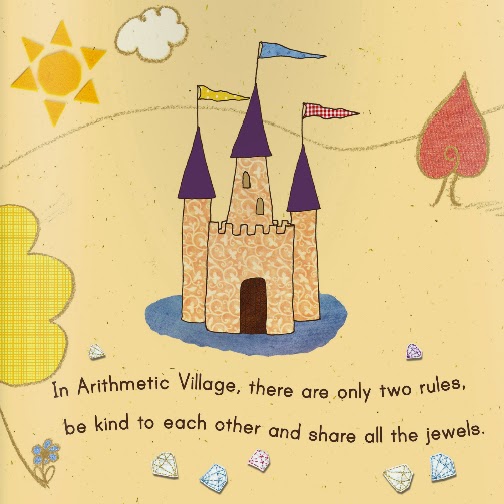
  I just recently found Arithmetic Village via a fellow mommy blogger and homeschooler who wrote a review about it here.  It's a cute little set of five books explaining the functions of addition, subtraction, multiplication, and division.  The illustrations are warm and charming, and the rhyming verse is not only fun to read but also easy for kids to recall. Each character also have traits told through story and rhyme for each basic mathematical process, which is a teaching method that I find very Waldorf compatible.

http://arithmeticvillage.com/


    I like the idea of getting some counting jewels, too -- like those flat glass marble things in their own colors since my kids are color coded, which makes my life more sane. The idea of decorating our math treasure chests is also a very appealing craft project.  Some beads, or those flat glass marbles/stones, and some wooden chests form the craft store would be just right. With my discount from teacher id, it would be very affordable, too.  We could make our own bags (in the story the bags hold 10 each), or I could get those organza favor bags from the wedding section and be done.

   For those who might find them useful, there are a _ton_ of free downloads, worksheets, activity packs, ideas, and videos to go along with Arithmetic Village, and the lady who came up with it is super nice, and very responsive to questions. There isn't a lot to purchase besides the books, and the supplies you might gather yourself can be purchased affordably -- you might even have some of it already!

   I'm actually rather excited about this! I got the .pdf copies of the book today (but you can get them beautifully printed out & ready to go), and am looking forward to binding/sewing our own (another handwork/craft project), and reading them. It'll be a little while before we really get into it, but I anticipate this one is going to be a real winner! 

   There are several places besides the main webpage where you can check out Arithmetic Village and the resources it offers:
a Pinterest page: http://www.pinterest.com/arithmeticv ,
a facebook page  https://www.facebook.com/TheArithmeticVillage  
on YouTube here
and you can even flip through the books here!: http://issuu.com/arithmeticvillage/docs


Friday, October 10, 2014

Why the movie "Frozen" is Acceptable for Eastern Christians

I am very aware and picky about media and what we allow in our house.  The overt and subtle and implied messages of such impactful mediums like tv and movies are not to be underestimated.  

You can imagine my own surprise when I previewed a Disney film and found it acceptable for my family. But I actually found the themes in this film bolstered our family's understandings. I was dumbfounded.I think that's one of the reasons I like this movie so much -- it jives with our o/Orthodox world view & much of our view of how human nature works.


My qualms with the movie "Frozen" and so small that they're almost not worth mentioning. A sexist gibe about blond hair being unmanly, and the sexy clothing Elsa changes/transforms in to are not really age appropriate (but there is truth about human life phases presented in that, as well). 
There are several themes in the film that are worth exploring -- and wonderfully noteworthy that they are presented in such a commercial children's film. This blog post is going to focus on the meaning/s of "Let It Go" and the nature of Elsa' transformation as surrender and release; the letting go of fear, anger, and resentment.  Through relationship Elsa actually gains a kind of control through surrender. It's one of the major paradoxs of Christian life.

Fr Michael Mandelas once told me that all fear and anger are a reaction to lack of control. Elsa's powers were out of control and harming others becasue she was out of control -- her own attempts at control were an illusion. All control is an illusion, and when we give in to the ego's whisperings that we can in fact control life, control others, we are very possibly falling into a spiralling trap that feeds on itself and takes us further away from our desired path with God. 


In the moments of the song, Elsa lets go of the fear & resentment -- but not entirely. She takes the first steps to be a conscious & active agent in her own life by moving beyond, cutting free the past, and trying to start new. She is taking the powerful first steps in shedding the abuse and cultural expectations that are holding her back from her potential and happiness.

It is not until Love is re-established in Elsa's life by the grace of her sister Anna's actions that she can really release the fear and anger, and surrender the control. That is when the path is clearer to her to become healed and moving rightly again. In the Eastern Christian view of the world, our salvation is not an individual pursuit -- the key lies in communion with on another, community and active participation in one another's lives. Elsa can't do it alone. 


When we live in love and trust in God, we no longer need the clinging to control, and the fear, resentment, and anger will begin to no longer have a place in our lives; they will no longer control us.

fear does not prevent death -- it prevents life

It seems very Eastern to me -- letting go of the ego, and not letting one's passions control oneself is the way to peace, self control, and however a person practices their asceticism, whatever path gets them there, the eventual goal is to "let it go" so that the block to relationship with God is no longer there.


When Elsa surrendered & understood that she was really, truly loved and valued as evidenced by Anna's act, she was able to let things flow and her abilities were able to finally be manifested for good instead of a reaction to the abuse & isolation she had suffered for years.The talents she had been given by God, and purposefully created with, were finally about to come to real fruition and use. 


Thursday, September 11, 2014

Book: "The Aescetic Lives of Mothers"

Based on the below review from Orthodox Christian Parenting. 

Also available here from Amazon. 


-----------------------------------------------------------------------------------------------------------------------


Gleanings from a Book: "The Ascetic Lives of Mothers: a Prayer Book for Orthodox Moms" by Annalisa Boyd

“I heard it said once that motherhood is a type of asceticism. Like the ascetics, mothers find themselves in a situation that requires their utter devotion, self-denial, daily emotional exercises, facing extreme challenges, and much prayer.” (p.17-18)

Those of us who are mothers know this to be true. There are many moments in each day when we give up our own desires to meet the needs of those around us; especially those of our children. How, then, do we have time to “pray without ceasing” while meeting those needs? Annalisa Boyd meets that question head-on in the introduction to her uplifting and helpful book, The Ascetic Lives of Mothers: a Prayer Book for Orthodox Moms.

This book is a must-have for any Orthodox mom who wants to prayerfully raise her children in the Faith. The heartening chapters at the beginning of the book set the reader’s mind at ease that she is not the only mother going through tough circumstances or wondering how on earth to live her Faith in the midst of the mundane tasks of motherhood. The bulk of the book is the myriad of prayers for various situations, which have been carefully gathered and organized by topic, and can therefore be easily found. The book includes basic daily prayers, prayers for times of trouble, prayers for the sick, preparation for confession, prayers of blessing and thankfulness, prayers through the stages of motherhood, prayers for godchildren and other “bonus” children, prayers for the future, and more.

A highlight of the book (and the largest chapter of all), titled “Tea Time at the Abyss”, references this quote:


“Stand at the brink of the abyss of despair, and when you see that you cannot bear it anymore, draw back a little and have a cup of tea.” ~ Elder Sophrony of Essex

In this chapter’s introduction, Boyd reassures the reader, “Let us step back and take tea together as mothers. Of course we may not be able to sit at each other’s tables and sip a perfectly steeped pot together, but we can pray for one another and be an encouragement. We can make a pot of gratitude for all the Lord has blessed us with and sip it throughout the day through prayer and the reading of His word. We can choose to face the difficulties, in the strength of Christ our Lord and lay down the idea that we must somehow bear it all. How freeing is that thought alone? May we take hold of even the smallest moments each day to enter into prayer, allowing us to step back and drink in Christ, for He promises to quench our thirst and give us His peace. Thank God!” (p. 38-39) The rest of the chapter lists topics from “Addiction” to “Special Needs,” which include quotes from scriptures and saints, as well as prayers related to each topic. (Note: some of the prayers in this book are prayers prescribed by the Church. Others are “simply prayers from the heart of one mama to another… (to) be used for encouragement and to promote your own personal prayer time with Our Lord.” ~ pp. 11-12)

This book is a wonderful aid to mothers at any stage in life. While it is aimed primarily at mothers, many of the quotes and prayers will be just as uplifting and useful for fathers, as well. It will be a much-used companion to any parent who adds it to their library and then faithfully uses it to help them to “pray without ceasing.”

“It is of great significance if there is a person who truly prays in a family. Prayer attracts God’s Grace and all the members of the family feel it, even those whose hearts have grown cold. Pray always.” ~ Elder Thaddeus


The Ascetic Lives of Mothers: a Prayer Book for Orthodox Moms by Annalisa Boyd is available for purchase here: http://store.ancientfaith.com/the-ascetic-lives-of-mothers/

Follow the author’s blog, “The Ascetic Lives of Mothers,” here: http://theasceticlivesofmothers.blogspot.com/

Sunday, September 22, 2013

An Interview About my Fabric Designs

For those of you who don't know, there is a site called Spoonflower where a person can upload their own designs and have them printed out on a variety of different fabrics. If you want, you can share these designs publically and even allow other people to purchase some.


Recently, I was interviewed by the lovely Lana Gordon Rast, and she published it here.  My work mostly is about themes relating to the activities my family does throughout the year including events and o/Orthodox feast days -- I've got a bit of Scottish themed fabric, play food, sewing kits/sets, kid fabrics, Medieval and historical line designs, and even some LOTR stuff..  Go check it out!


Monday, September 9, 2013

Get a Homeschool ID Card (for free; for teacher or students)

There are lots of places that require some sort of identification card, and there are many businesses which give a student discount or a teacher discount.  It's really worth having one.  Here are two good places online to make your own.


Free Homeschool ID Card from the Homeschool Buyers Co-Op

Make it, save/download it, and print it off, and laminate it. You also have the option of ordering "a professionally printed, sturdy plastic (PVC) ID card from the Co-op for only $7.95" I choose this option because it's fast and very professional looking, very durable, and it very quickly pays for itself. 


 Badge Maker from Big Huge Labs

"Make your own ID card, press pass, name tag, unofficial Flickr badge, or any other kind of identification. Print it out, laminate it, wear it with pride! Make any kind of identification* easily in just a few seconds."  Make it, save/download it, and print it off, and laminate it.


Sample

Wednesday, September 4, 2013

A Comparison of Waldorf Homeschool Curriculum/Curricula

Note: this is a compilation of comments and experiences of other people. At the time of this post, I do not have any first hand experience with these. Many of the materials for these can be purchased second-hand, and the cost/prices listed are directly from the curriculum's main website. There are more options out there than are discussed here. Presented below in alphabetical order are thoughts & review notes on BEarth/EarthSchooling, Christopherous, Enki, Live Education, Oak Meadow, Waldorf Essentials, and Wee Folk.


– affordability: $85 ($650 for family membership)
– through 8th grade
– can buy just parts of it, a year's curriculum or just subject blocks, or purchase a lifetime membership
– a lot of information offered and to go through
– offers many additional and supplemental classes, workshops, and skill teaching, and some free online resources and articles
– not pre-prepared for the parent teacher, and at the time of this blog entry the information was hard to sort through because the file name & organization on the site was not consistent 


– affordability: $275-$475
– generally considered very true to the Waldorf method of child developmental stages
– names after the legend of St Christopher who carried the Christ child across the river
– 1st grade through 4th grade available as of this blog post; guides for subsequent grades, and more coming out each year
– written by a Waldorf trained teacher who also homeschooled, and written specifically for the homeschooling environment
– generally considered very true to the Waldorf method of child developmental stages
– simple to follow; laid out in very easy to find and follow blocks
– guide books have a lot of detail
– ways to incorporate the daily activities of the home into learning opportunities


– affordability: $325-$750
– Waldorf-y with a Buddhist bent; name “Enki” after an ancient symbol of flexible wisdom
– as of this blog post, it is only up through grade 3, and adding more each year
– focus and drive behind curriculum choices is to provide a multi-cultural exposure
– moves from teacher-led, to peer-led, to student-led learning
– does not provide a day by day approach to home education, requires additional work by parent
– offers teacher training and consulting packages


– affordability: $420-$480 (note: can't buy just the books without also purchasing consulting)
– very true to the philosophy behind Waldorf education
– kindergarten through 8th grade
– LE is like a bunch of how-to books, or instruction manuals that teach the parent how to teach Waldorf style; like teacher training; similar to what would be done in a school/institutional setting
– comes with a personal consultant to guide & answer questions
– offer a block (3 to 4 weeks) of lessons to present for each block subject. The parent then creates a similar block to rotate into the schedule later in the year. It's not hard because you already have the template and the info to plug into the lesson, but it is more work, more time-consuming that a completely prepared syllabus
– requires additional research, reading, parent-education, organization and preparation; parent has to create additional lessons beyond what is directly/immediately offered
– a flexible, sequential curriculum that can be adapted to the family’s needs
– not a day-by-day syllabus/template, but rather about the subjects and how to approach it, what to cover, presentation of it
– an abundance of add-on material to choose from


– affordability: $130-$450 
– general characterization: Waldorf inspired, quite a bit of Montessori influence
– has a Waldorf flavor, but it's not very true to the philosophy behind Waldorf education, takes aspects of it like crafts and art; does not have all the stories and fairy tales
– preschool through 8th grade
– is fundamentally set up differently and starts academic, alphabet, and reading/literacy work earlier; considered more mainstream
– does not follow the Waldorf/Steiner year-by-year to build upon the child's developmental stages
– well established & lays out day to day lessons
– OM is scheduled out for you by the week
– often considered “too academic" for those following a Waldorf path, or "not academic enough" for those expecting their children to be reading and doing math early
– some say it's labor intensive for the parent teacher, others say it's easy to follow and to dive in as an untrained teacher

WALDORF ESSENTIALS
Waldorf Essentials Logo

- affordability: $40-$550
- purchase individual grade components, notes, and guides, or buy a lifetime membership that gives access to all materials of all grades and includes mentoring and coaching
- very Waldorf authentic
- creator has schooled all her children through all grades
- a lot of parent support and availability to answer questions, includes possible parent guides and parent lessons
- has home rhythms and school rhythms laid out
- main complaint is that requires a lot of inner/personal work on the part of the teacher, which is also a major bonus to a lot of people


Wee Folk's Curriculum Guides
– affordability: free to download
– preschool-kindergarten (4-6 years old)
– four seasonal 12 weekly units laid out by week and not day-by-day
– moves with the seasons; stories and related crafts/activities
– easy to do, no pressure, easily modifiable and does not take large chunks of time nor every single day
– generally kids love it; easy to present at several ages all at once
– easily modifiable, allows a lot of flexibility for the household schedule; go at whatever pace you want/need


Wednesday, May 23, 2012

"Review of the Herb Fairies Series" or, "Momma! I see chih-eed!"


I have long been interested in medicinal plants, and I have a kind of un-explored love affair with herbs of all kinds. So, when Mountain Rose Herbs told me about the upcoming Herb Fairies series from Learning Herbs, I was really rather stoked. My oldest kiddo watched the intro video with me, and she got very excited, too. That settled it for me, and I got it. It also came with some nice freebies like an attractive medicinal herb poster chart, and an e-book of herbs for your kiddos' cold & flu season. Here is my assessment of the experience & product so far. The below is kinda' long, so if you want the short version: I do recommend this series. It's neat-o, and works so nicely with our homeschooling. (note: I do not receive any compensation for my review, nor am I affiliated with Herb Fairies)


This is a series of chapter books (around 40 pages), with one released each month electronically. Thus far we have seen the books about Stellaria (chickweed) and Viola (violets). There are a lot of illustrations, which is delightful for readers of all ages, but especially necessary for my wee crew (ages 2.5, 4.5, and 6.5). Sometimes the illustrations don't always perfectly match up with the writing, but they are close enough that my kiddos don't notice.
Several things come along with the release of each book. You also get a poster of the fairy, a coloring page for the fairy, an mp3 version of the story read by the author, a past corresponding issue of Herbal Roots e-zine that is around twenty pages of more info on that month's herb (poems, songs, activity pages, and idea on how to use the herb), nicely laid out herbal recipe pages, a journal for kids to write down their thoughts and info learned, and the book in several e-reader formats as well as the .pdf version. I've really felt like we've gotten a lot of value for our money, and it was worth every penny for this unique product. 

I like that everything is electronically downloaded. The website is also very nicely organized with visuals like an icon for each book/herb that keeps it all very easy to find what you are looking for. This makes it possible for me to use it on my computer, on the tablet, and can print out what I need. I have more than one kiddos, so it's nice to be able to easily print out multiples of the same activity sheet or coloring page. At night, we read a chapter (or however many pages we can get through) on the tablet. I have the books printed off and in a binder because there is no substitute for the availability of hard copy, and when we have finished going through a book and its extra materials together, I then add it to the book shelf and the girls can look through it at their leisure. 


Although there is an online forum at the Herb Fairies site for users, it has yet to become a real community, but it does have the potential. The members are very actively interested in participating, sharing, and discussing the books, even wanting to share their own creations and fan art involved with the book series. At times tho', it seems like some of the staff have all but quashed it. I understand the need to protect copyrighted material, and I also understand from experience how hard it is to put something out to the public that you have so much of yourself, your time, and resources in. I think that the folks who put out Herb Fairies could nurture the obviously very active and devoted users they have. This is clearly a big deal to the readers who are downright fans and want to participate in a bigger way. This is all new, so we'll see how it shapes up. Update: No community has formed on the Herb Fairies site, and everything about that aspect has kinda' died-out. I'm not even sure why they keep a talking forum on the site.However, in the Spring of 2014 (around two years after this post) a Facebook group was started that looks very promising.

The stories have been lots of fun! The storyline to both books is repetitive in all the right ways for children to be able to follow along and absorb the information without having to focus on too many twists or new elements being introduced. There is a story-arch with the first book to be read in teh Springtime, and the last book finishing in the next year's Springtime with the herb for each book being introduced seasonally. They should be read in order.  (spoiler alert) The kids  in the story are out playing when they find a fairy who needs their help back in the fairies world, they help heal the ailments other magical type creatures (like trolls), and in the process describe the herbs and how to use them. The other magical creatures also have names the children must guess that are character traits and relationship descriptors (like, "trust" and "awareness"). I can't hardly wait to see what the list will be from all twelve books! The fairies names are taken from the botanical scientific names of each herb. It's just really chock full of info and details all throughout the stories, also introducing them to various crafts and hand-work like weaving or carving, cooking and painting, etc. The only difficulty I have is finding enough unique voices to read for the characters, and keeping them all straight! 

In our area we have had some difficulty finding some of the herbs, but after a few weeks we did finally gather some chickweed, and we will be making a road trip to another part of the state with a markedly different climate to gather, pot, and take home more. It is really important to me that for this learning experience to work, we need hands-on activities with the plants. If you just absolutely can't find any, there are places online that sell the seeds, or even plant starts.

My kiddos have been inspired to eat the leaves, cook with flowers, and go out gathering supplies from nature. They have made little poultices fro their owies, and even showed their friends these magical plants that are "powerful medicine". They have really taken their knowledge out into their activities. They have been excited to look for an identify plants, and hearing their little voices talk about the “chih-eed!”, or “Momma, can we eat this?” just makes me feel very satisfied that they are really learning to interact with their world in a useful way. They have eaten chickweed sandwiches, and made flower syrups.

Something that is very important to us in the materials we choose is that they support our understanding of the world and ourselves. I simply do not allow things into our home that disaffirm our innate dignity, or teach values that are contradictory to ours. There have been some fairy books, or books about learning about plants and the natural world that are based in a neo-pagan language, or a kind of earth-worship. The Herb Fairies is not one of those, and is not preachy nor does it espouse a particular framework of belief. It just keeps to the fairies, their little lives and houses, and what the plants do. Now, if you are firmly against the idea of magic, then these books are not for you. For us, the wonder of God's creation is indeed magical and miraculous! and having the sense of wonder and delight about the magic of the plants' "powerful medicine" works just fine for us in our Eastern Christian world view.

Conclusion:
I would whole-heartedly recommend it. We have learned so much, and my children have really absorbed the information including eating leaves! Maybe one day they'll actually eat a green salad for supper (might be too much to hope for right at this time). This is shaping up to be a good thing. The writers said that now is the year's trail period as they figure things out. For those who didn't jump on it right when it came out, it has been stated that sometime next year (2013) it will be re-released.